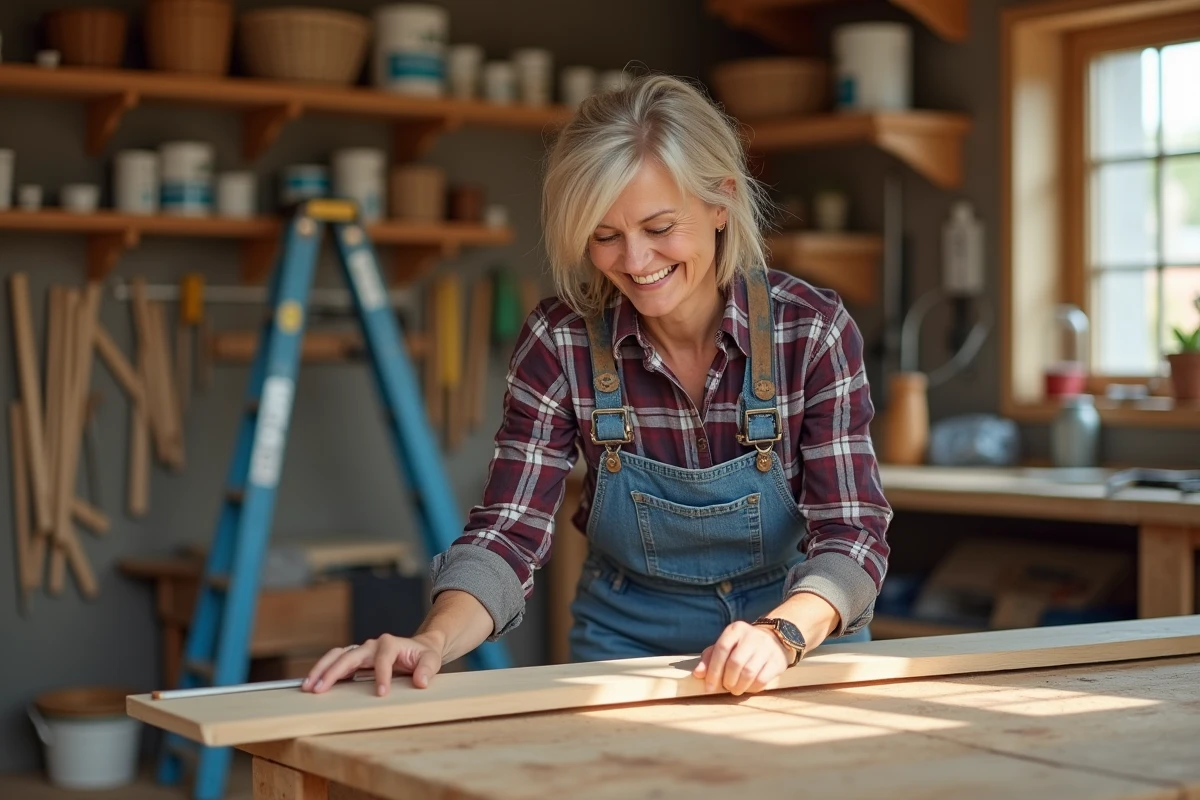
A piece of furniture without instructions is like a recipe without ingredients: many try, convinced they will be faster, and end up starting over. Taking the time to follow the order of the steps avoids last-minute curses and wobbly shelves.
You can always dream of the perfect universal tool. But true DIY doesn’t forgive shortcuts: the right screwdriver, the appropriate pliers, and a reliable drill matter much more than a multitasking gadget. Accepting to proceed methodically, even if it seems longer, is to gain serenity and pride in the result.
Why DIY at home doesn’t require being a pro
DIY has become mainstream. No longer is it a question of leaving the work to just the initiated. Repairing, creating, setting up a piece of furniture, or repainting a wall has never been more accessible to everyone. Today, the home is the space for all manual experiments, from small renovations to more ambitious decorating projects.
There’s nothing tricky about getting started: help is plentiful. Between online tutorials, discussions on forums… and resources like https://bobolebrico.fr/, all it takes is a little searching to find practical advice, step-by-step guides, or inspiring ideas. Everyone, alone or with family, learns to handle screwdrivers, brushes, or measuring tapes. We discover together, we fail, we correct, and it is these shared attempts that anchor progress.
This collective movement relies on several simple dynamics:
- The sharing of decorating and organizing tips, with everyone contributing their finds to help everyone move forward.
- The importance of mutual trust in exchanging advice, much more than pure technicality.
The image of the isolated DIYer is gone: the home becomes a place where the desire to do it yourself is passed on, where tips and feedback circulate and improve over the course of projects. Rethinking a wobbly shelf, daring to use color on an old sideboard, making a clever wardrobe… The joy is everywhere, and learning happens together.
Choosing the right tools and first reflexes to start without stress
To progress in DIY, a targeted collection of tools is more than enough. There’s no need to fill an entire workshop: a simple hammer, flat and Phillips screwdrivers, universal pliers, a level, and a tape measure form a solid base. Add a handsaw and sandpaper for wood, and the first projects, like a bench, coffee table, or planter, become accessible.
To avoid classic pitfalls, minimal organization always pays off: a clear space, sufficient light, tools ready to use. The quality of materials plays a key role: appropriate screws, paints designed for the surface, dry wood, and treated accessories for outdoor use if necessary.
Some very simple principles can prevent many disappointments:
- Mark every reference point carefully, measure several times before cutting or fixing; precision changes everything.
- Draw inspiration from manuals and practical guides for each environment, surround yourself with clear ideas before screwing or drilling.
In DIY, reading the instructions, testing on scraps, refining your method bit by bit: this is the safest way to learn and take risks. Experience doesn’t come from a miracle tool, but from paying attention to details and what works, for oneself and for one’s home.

Successfully completing projects: avoiding classic pitfalls and gaining confidence
Taking on a project at home brings its share of apprehensions; it’s natural. Mistakes often recur: an inaccurate measurement, paint applied in the wrong order, or poorly prepared supports.
To approach the practice with serenity, a few essential reflexes make a difference:
- Take all measurements carefully. At the slightest deviation, the alignment of a frame or the installation of a shelf may go awry. A level and reference points: your best allies.
- When mixing several materials, always anticipate the order of operations. Painting before screwing or gluing, preparing the supports in advance, changes everything in the final result.
- Never neglect the basics: degrease, sand, dust. A clean surface ensures a paint that lasts and a neat finish.
We progress step by step: by first testing our tools, patiently rereading the instructions, correcting as we go. The breakthrough doesn’t come from a miracle trick, but from the ability to observe, experiment, and adjust.
On the ambiance side, taking the time to adjust colors and materials according to natural light, experimenting in discreet areas, helps avoid regretting choices on an entire wall or piece of furniture.
Moving forward means appreciating imperfection and the room for improvement. With each straight shelf, each colored wall, we lay a stone in a home that reflects us. Gradually, the gestures become more assured, and confidence settles in. And the home, transformed by the work of our hands, tells a story in every corner.