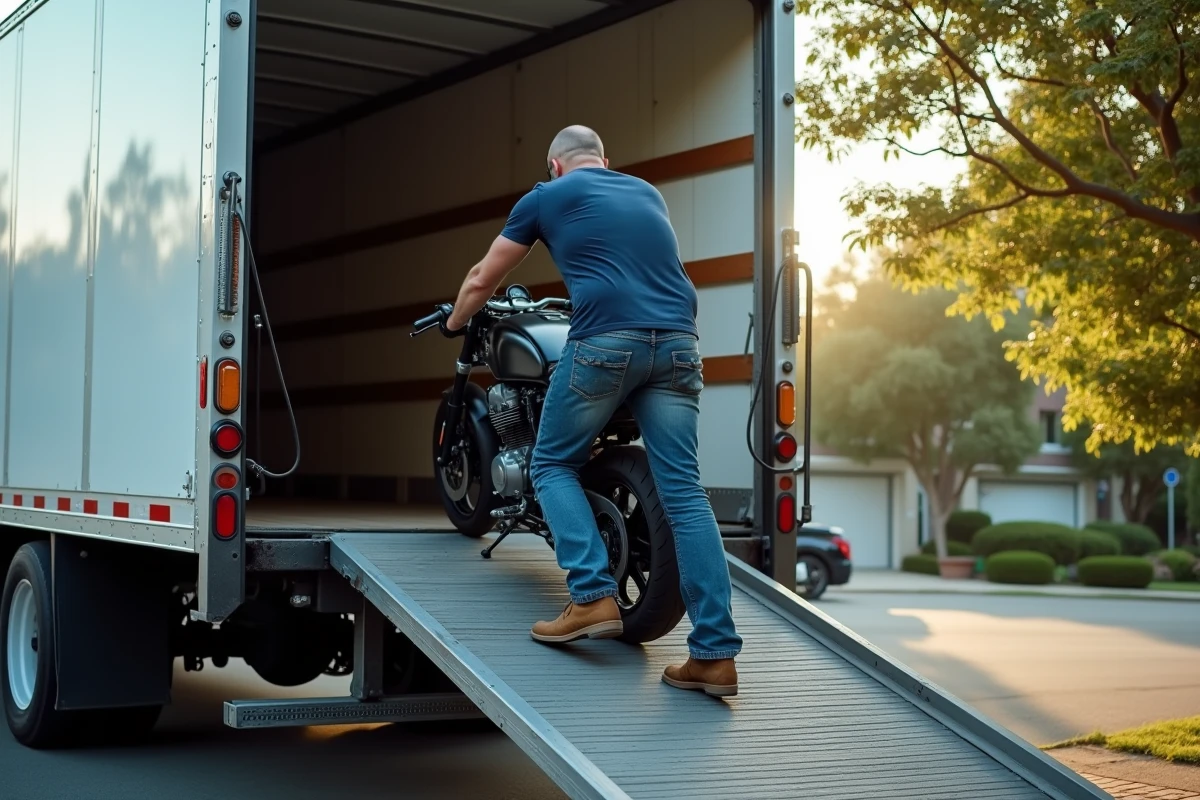
A rental truck with a tailgate, an aluminum ramp, and four ratchet straps: on paper, transporting a motorcycle seems accessible to any rider. The reality of solo loading tells a different story, filled with poorly positioned anchor points, ramps that are too short, and straps tightened in the wrong places. Understanding the technical constraints before booking a utility vehicle helps avoid mechanical damage and injuries that online tutorials often downplay.
Motorcycle securing in a truck: the strapping mistakes that tutorials don’t show
Most video guides demonstrate securing in ideal conditions, with two people, a flat surface, and a lightweight motorcycle. When loading solo, the main risk is not the motorcycle falling on the road, but the domestic accident during loading or strapping.
Loading a motorcycle weighing over 200 kg onto a narrow ramp requires perfect alignment between the ramp and the truck floor. A lateral shift of a few centimeters is enough to tip the whole setup. We regularly observe damage to fairings, brake levers, and mirrors during this phase.
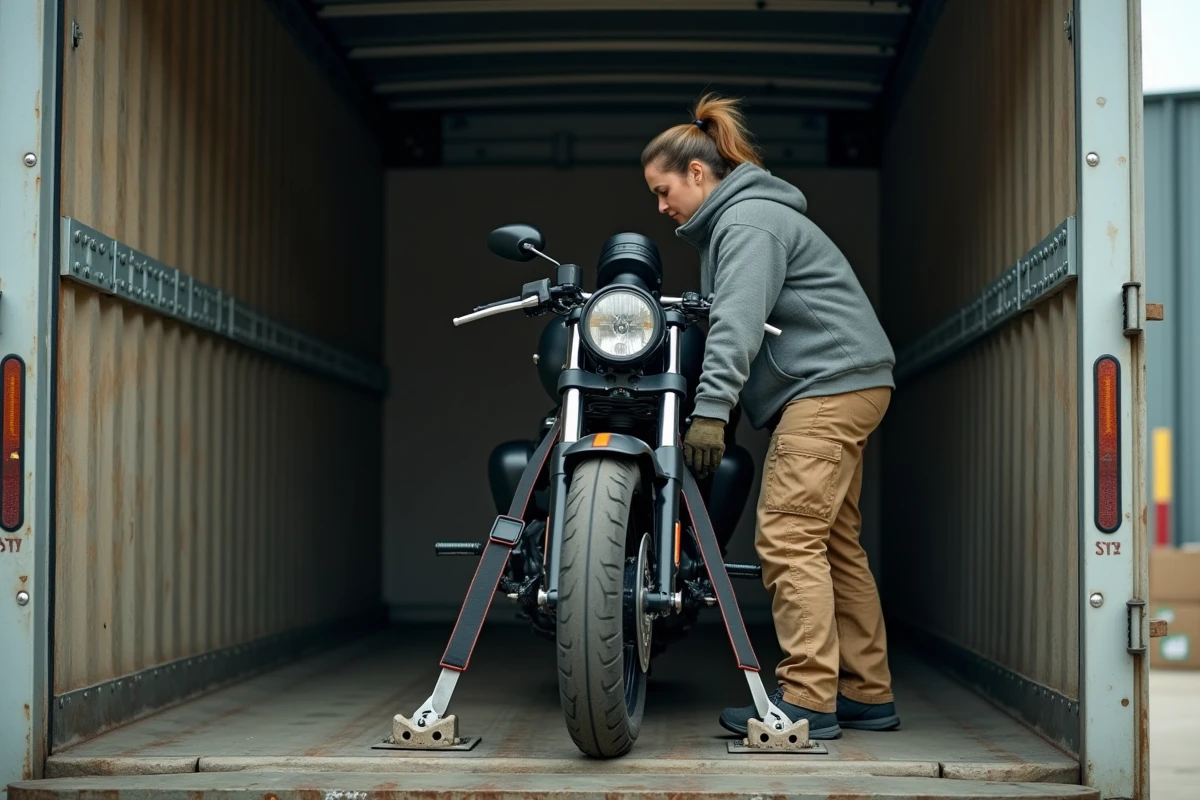
Strapping on the half handlebars or clip-ons damages the steering stops. The correct anchor point is located on the lower fork clamps or via dedicated handlebar slings, which distribute tension without compressing the steering components. The fork should be compressed by one-third of its travel, no more, to avoid damaging the seals.
Since January 2026, decree no. 2025-1478 requires rental companies to provide a certified NF anti-vibration securing system in any rented truck for transporting two-wheelers. In practice, not all rental companies have updated their fleets yet. We recommend checking for the presence of this device when picking up the vehicle, or risk a fine in case of inspection.
Choosing the right rental utility vehicle to transport your motorcycle
A 12 m³ van with a low floor and hydraulic tailgate remains the most suitable format for a solo rider. The interior height must exceed 1.80 m to work standing around the motorcycle. A vehicle that is too small forces you to strap in a crouched position, which reduces the tightening force and the precision of the securing.
The question of motorcycle transport truck rental is not limited to volume. The determining factor is the number and position of the anchoring rings on the floor. A truck equipped with at least four points, arranged in a rectangle around the motorcycle’s position, allows for stable cross strapping. Two points aligned on one side are not sufficient.
- Check that the anchoring rings can each support at least 400 daN of load, which covers the vast majority of road motorcycles
- Prefer a tailgate over a removable ramp: the tailgate offers greater width and stability for solo loading
- Ask the rental company if the floor is non-slip or if a rubber mat should be provided, as a smooth plywood floor becomes dangerous as soon as it is wet
Electric truck rental and ZFE restrictions for motorcycle transport
Low emission zones now cover most major urban areas in France. A diesel truck with a Crit’Air 3 category or higher simply cannot enter these areas during regulated hours. For motorcycle transport to or from a metropolitan area, the electric rental truck eliminates the ZFE constraint.
The adoption of electric utility vehicles for rent has significantly progressed in urban areas since 2025, according to ADEME. The range remains limited to short trips, typically under 150 km depending on the models and the load carried. For inter-regional transfers, diesel or biofuel remain the only realistic rental options.
The instant torque of the electric motor offers an unexpected advantage: starting on a slope with a motorcycle secured at the back is smoother, without the jolts of a gearbox. This detail matters when transporting a 250 kg trail bike and negotiating a parking ramp in a basement.
Insurance and liability when transporting a motorcycle in a rented utility vehicle
The contents of the truck are almost never covered by the rental company’s insurance. The rental guarantee protects the vehicle itself, not the motorcycle loaded inside. In the event of sudden braking or an accident, any damage to the motorcycle remains the rider’s responsibility.
There are two solutions to cover this risk:
- The “goods in transit” warranty extension offered by some rental companies, which generally covers up to a fixed ceiling per claim
- The motorcycle insurance itself, if the contract includes a “third-party transport” clause, which is not the case for all contracts. Check the general conditions before departure
- A one-time insurance policy like “goods in transit,” which can be purchased online for the duration of the transport
A point of caution concerns proof of the motorcycle’s initial condition. Photographing the motorcycle from all angles before loading, with timestamps, is the only protection in case of a dispute. Without dated photographic evidence, no claim will succeed.
Ramp, workshop stand, and rail: the equipment that changes solo loading
An aluminum loading ramp of at least 2.40 m reduces the angle of inclination to a manageable level for one person. Below this length, the slope becomes too steep to push a heavy motorcycle without assistance. The weight of the ramp itself matters: beyond 15 kg, handling it alone at the end of the day becomes cumbersome.
The front wheel rail fixed to the truck floor transforms the securing process. Once the wheel is secured in the rail, the motorcycle stands vertically without assistance, freeing both hands to secure the straps. Without a rail, you have to hold the motorcycle with one hand and strap with the other, a situation where incidents occur.
A wheel chock and four quality ratchet straps are better than a poorly mastered complex securing system. Elastic tensioner kits sold in supermarkets do not provide the necessary tension to immobilize a motorcycle on a highway trip. Ratchet straps with soft coatings at contact points remain the standard.
Transporting a motorcycle in a rental truck works, provided you do not underestimate the loading and securing phase. The right equipment, checking the vehicle before departure, and explicit insurance coverage make the difference between a controlled transfer and a damaged motorcycle at the back of a van.